Given a thin square lamina of a size a × a and mass M (see fig.)

Text Solution
Verified by ExpertsThe correct answer is:
CHECK THE SOLUTION.
Sol. Denote by A the area of the square. By definition, in our case, we have :
I x = 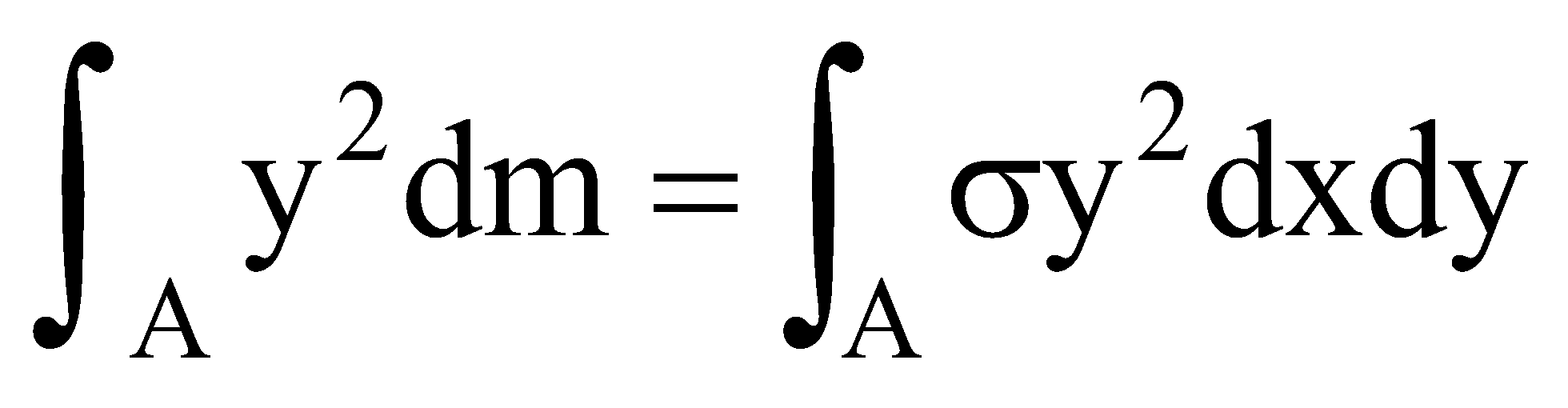 …..(i)
where σ is the mass per unit area. Therefore,
I x = 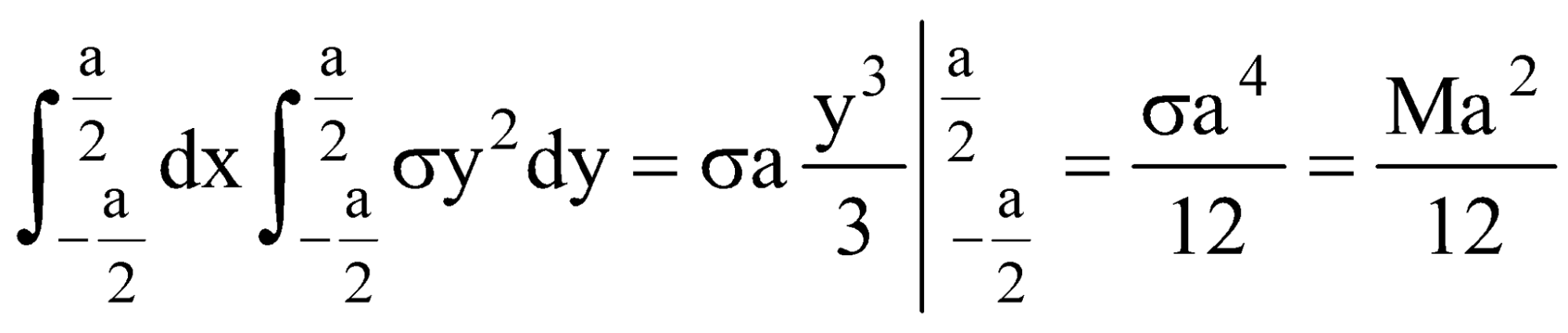 ....(ii)
Since M = σ a 2 . As the square is symmetric under rotation by 90º, we have
I y = I x …..(iii)
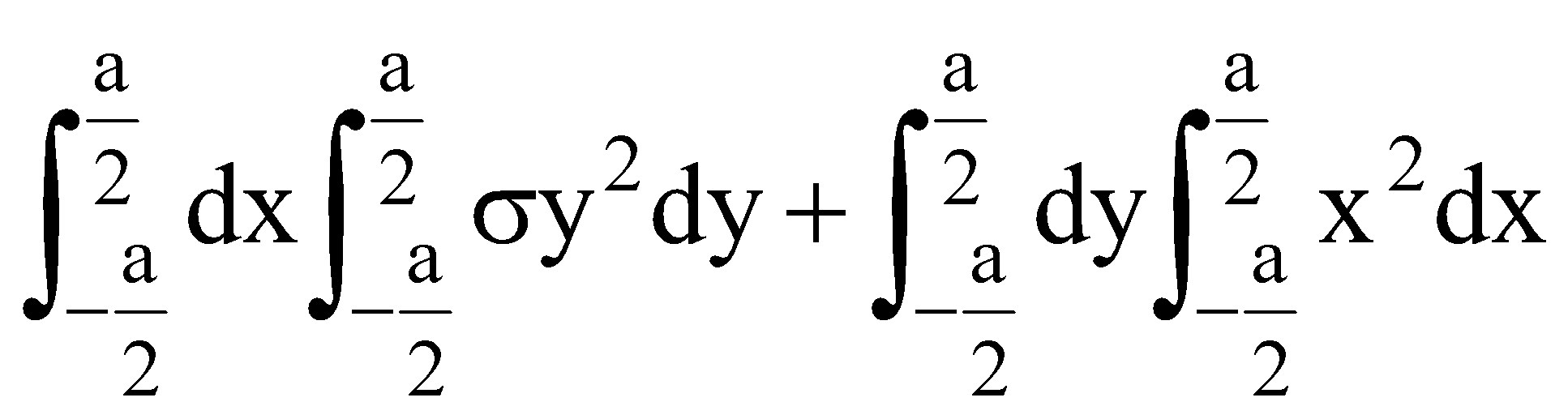
The moment of inertia around the z axis is
I z = 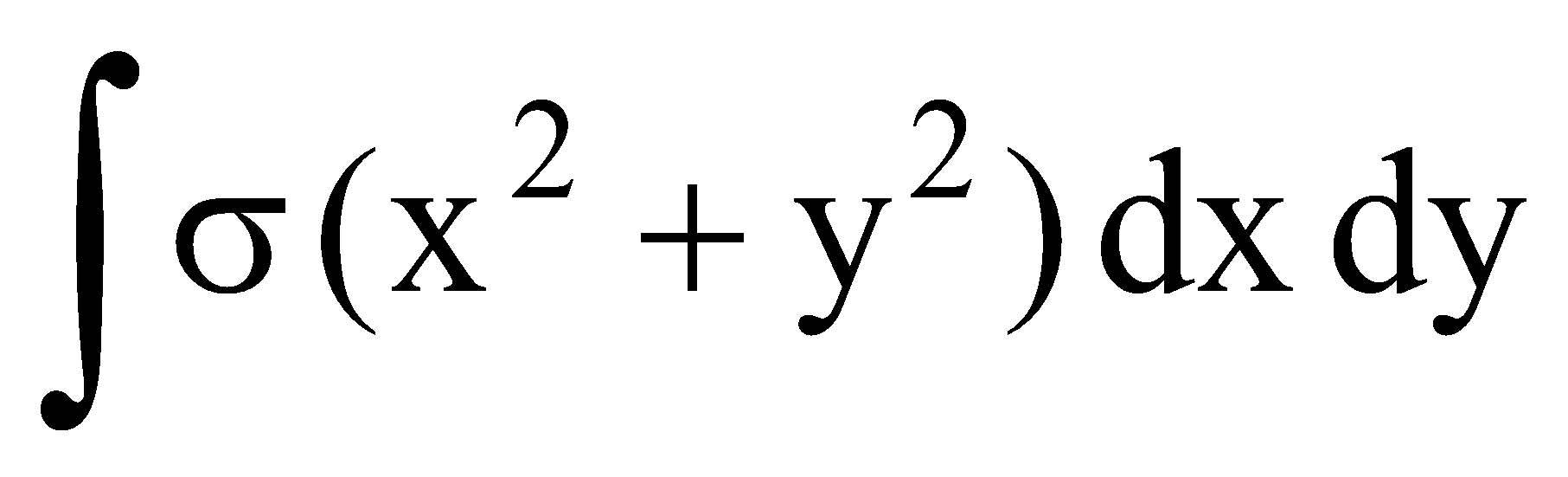
= 
= 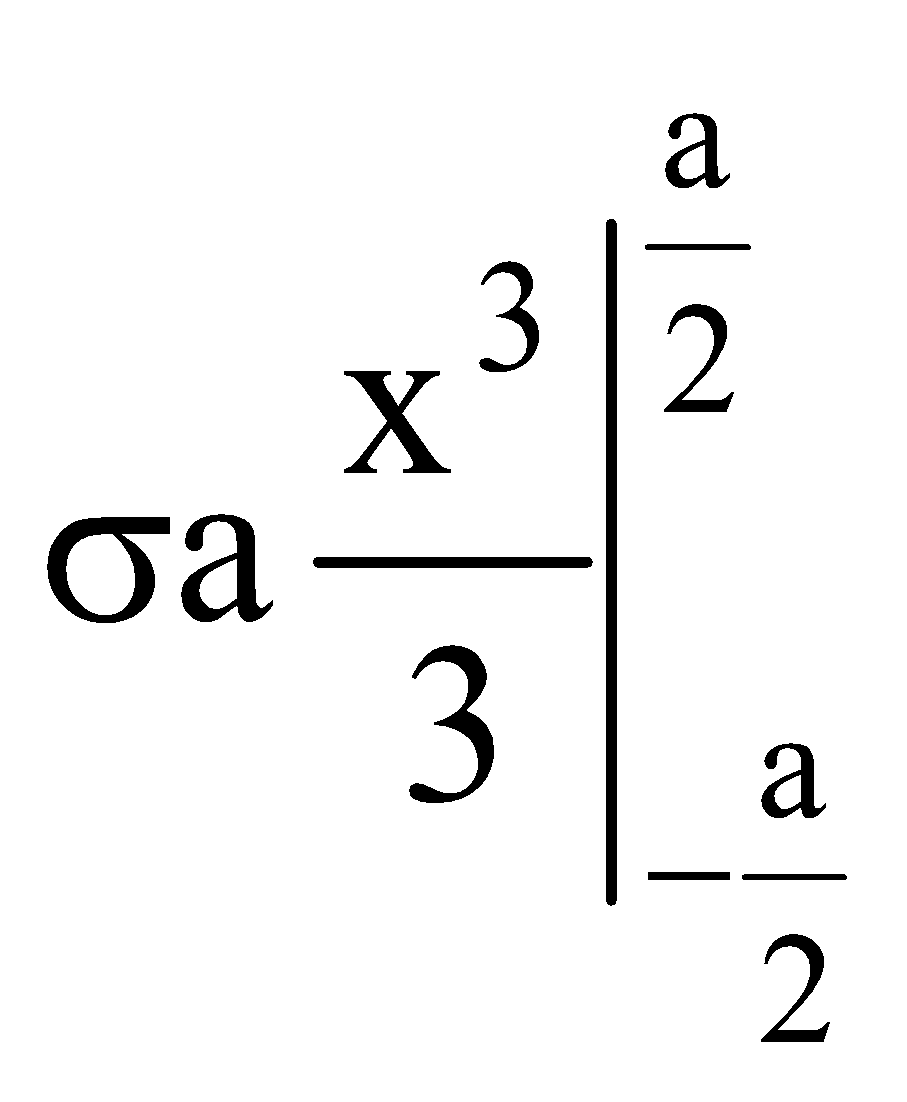 +
+ 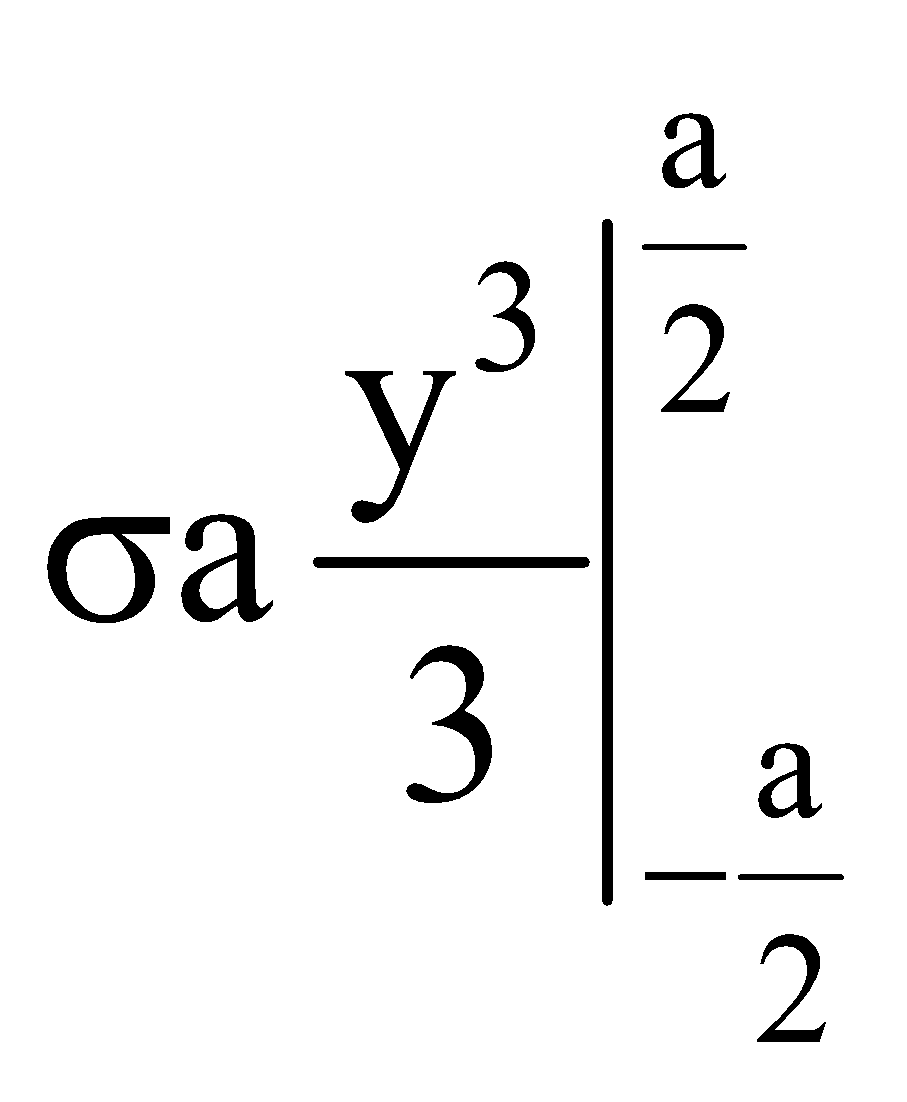 =
= 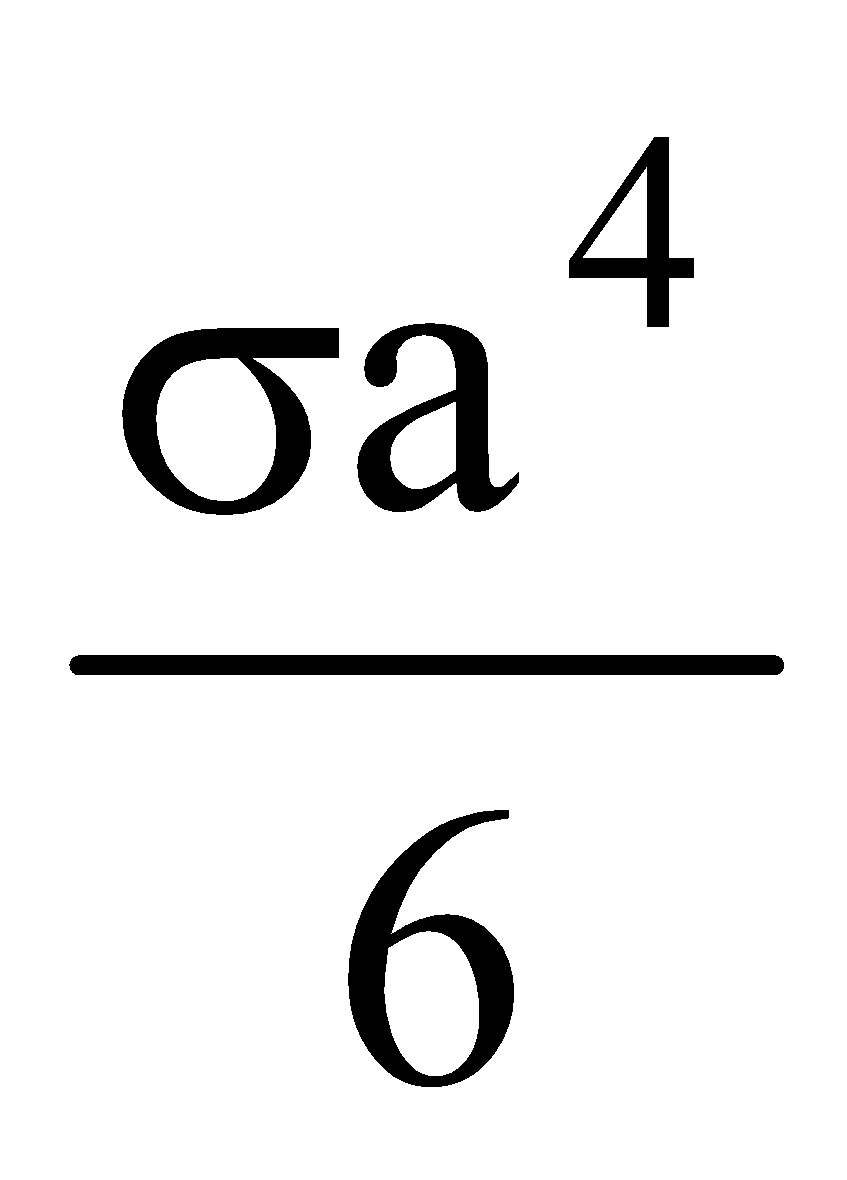 =
= 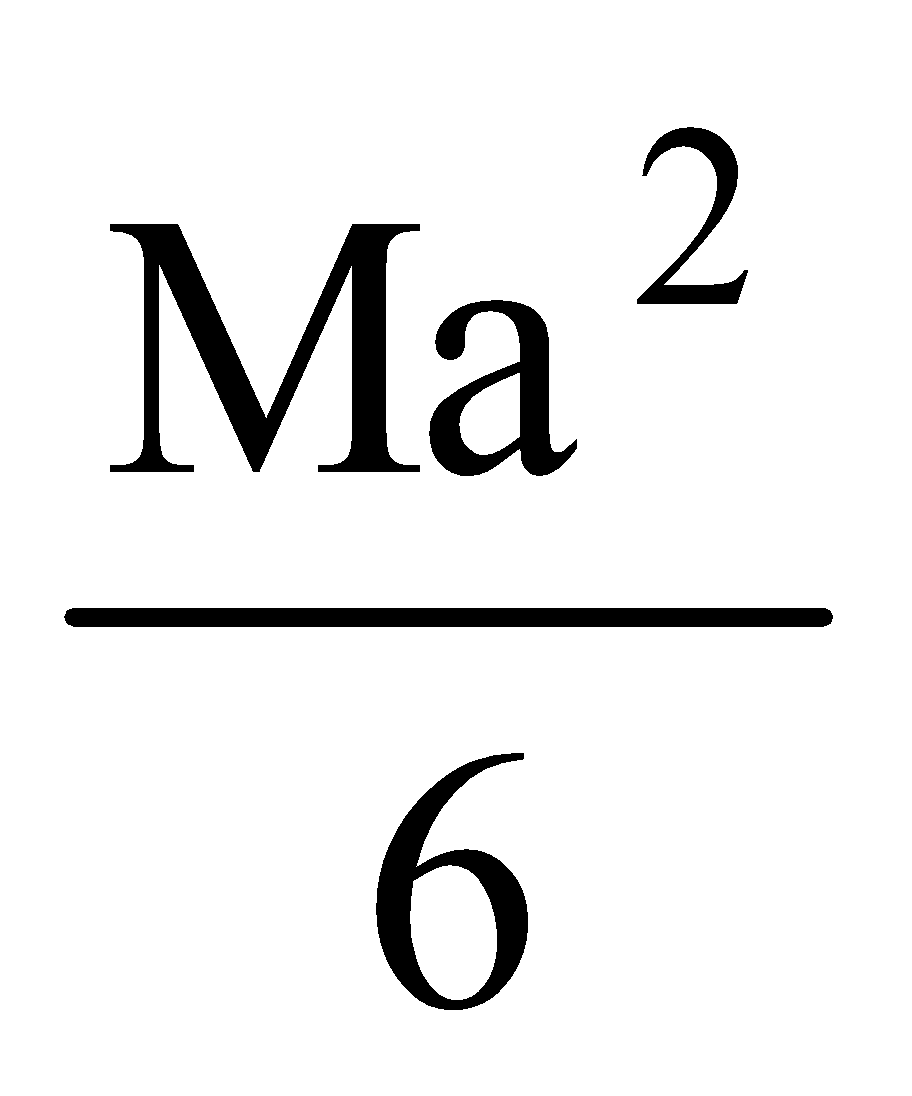 …..(iv)
We have : I z = I x + I y = 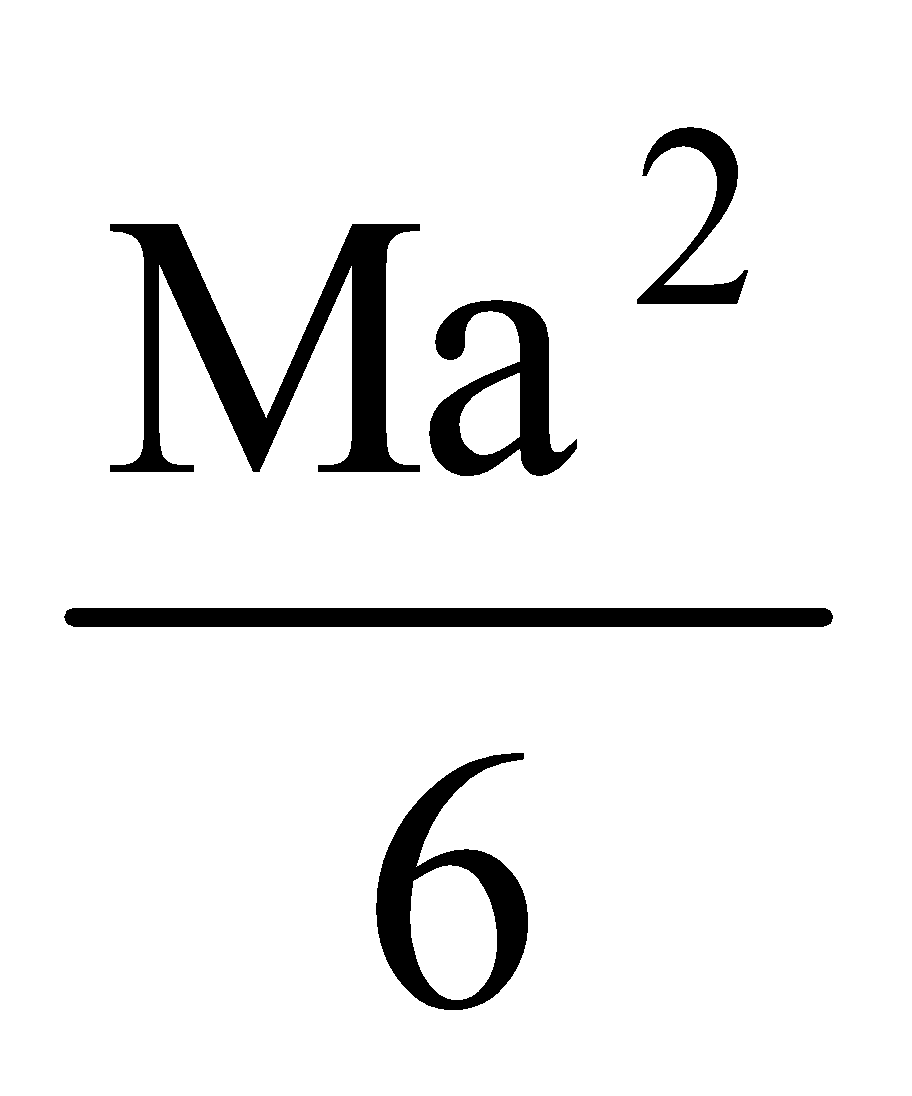 .....(v)
Hence, the perpendicular axes theorem is verified.
Prepare Smarter with CGP Edu
Get practice questions, solutions, and test series in one place.
Write a Review
Share your experience with this question and solution.
Commentary
Send your comment, doubt, correction, or feedback to admin.
Similar Questions
Explore conceptually related problems
Four identical particles each of mass m are placed on x-y plane as shown. If I x , I y and I z are …
A disc of mass m and radius r lies in x-y plane with its centre at a distance 'a' from origin at (a…
Moment of inertia of a body is independent of the dimension of the body parallel to the axis of rot…
Figure shows a uniform rectangular sheet with . Moment of inertia of the sheet is maximum about
Which of the following graphs correctly represents the variation of moment of inertia of a thin ci…
Four holes of radius are cut from a thin square plate of side and mass . The moment of inertia o…